

 See My Latest Article on HelloNation
Smoke detectors provide early warning only when they have power, can sense smoke, and produce an audible alarm throughout the home. Testing them regularly takes less than a minute per device and can reveal weak batteries, aging equipment, poor placement, or wiring problems before an emergency occurs.
How often should smoke detectors be tested?
Test every smoke detector at least once a month. Monthly testing is especially useful in homes with multiple floors, attached garages, finished basements, rental units, or rooms that are closed for long periods.
A detector should also be tested:
- After replacing its battery
- After a power outage
- After remodeling, painting, sanding, or drywall work
- If the alarm sounds faint or unusual
- If the detector has been exposed to dust, steam, insects, or high humidity
- After moving into a new home
Testing should be done during daylight when possible. The sound can be startling, and someone in the home should know that an alarm test is taking place.
What is the proper way to test a smoke detector?
Stand beneath the detector and press its test button firmly for several seconds. Most units require the button to be held until the alarm sounds.
A properly operating detector should produce a loud, repeating alarm. If the devices are interconnected, pressing the test button on one unit may cause all connected alarms to sound. This confirms that the communication link is working, not just the individual detector.
Follow these steps:
1. Notify everyone in the home that the alarm is being tested.
2. Ask household members to listen from bedrooms, hallways, and other occupied areas.
3. Press and hold the test button until the alarm activates.
4. Confirm that the sound is loud enough to be heard through closed doors.
5. Release the button and wait for the alarm to stop.
6. Repeat the process for every detector.
Do not test a detector by holding a candle, lighter, or burning paper near it. Open flames can damage the unit and create an unnecessary fire risk. The test button checks the alarm’s electronics and horn without introducing smoke into the home.
What should happen if the alarm does not sound?
If there is no sound, press the button again while holding it longer. Some buttons are stiff or require direct pressure in the center.
If the detector still does not respond:
- Replace the battery if it uses a replaceable battery.
- Make sure the battery is installed in the correct direction.
- Check for a battery pull tab or shipping cover that was never removed.
- Confirm that the detector is fully attached to its mounting base.
- Reset the unit according to its instructions.
- Replace the detector if it remains silent.
A hardwired alarm may still have a backup battery. If the household electrical power is off, the detector should normally operate from that battery. A hardwired unit that remains silent after a fresh battery is installed may have a wiring, connection, or equipment problem that requires electrical troubleshooting.
Never leave a nonworking detector in place simply because another alarm in the home works. Each sleeping area and required location needs reliable coverage.
How do you test hardwired and interconnected detectors?
Hardwired detectors are connected to the home’s electrical system and commonly include a backup battery. Many are interconnected, meaning activation at one detector causes other compatible alarms to sound.
To test this arrangement, press the test button on each unit separately. Listen for the expected response from the other detectors. If only the device being tested sounds, the alarms may not be interconnected, may use incompatible equipment, or may have a communication fault.
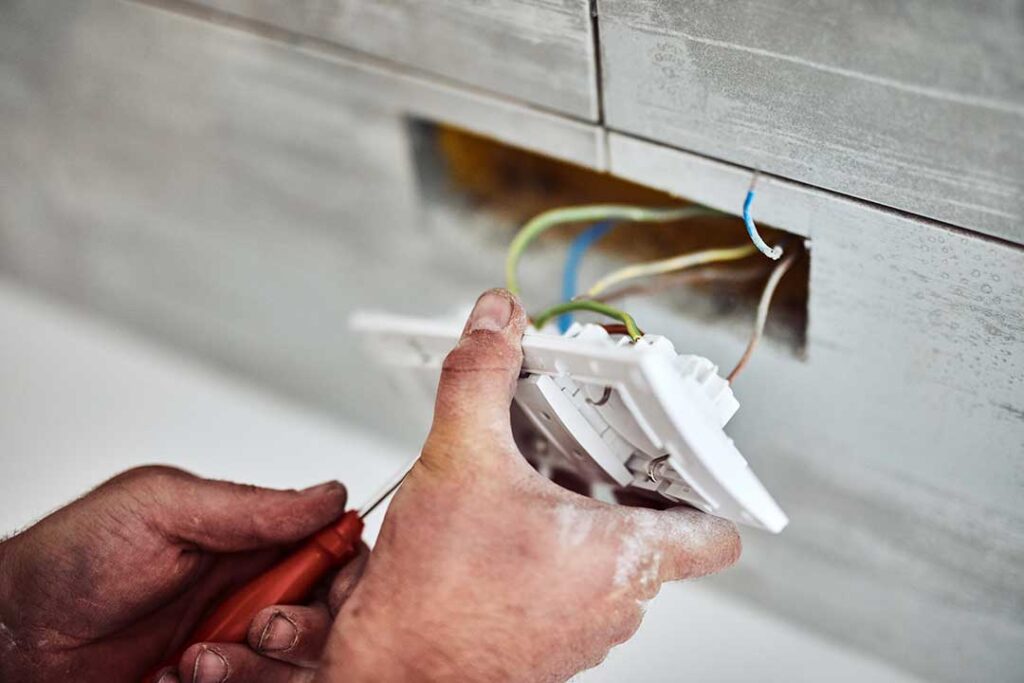
Avoid disconnecting a hardwired detector to silence a nuisance alarm. Removing it can leave an area unprotected, and improper handling of the wiring can create a shock or fire hazard. If an alarm will not reset, turn off power only if it can be done safely and follow the manufacturer’s instructions. Electrical work inside a junction box should be handled by a qualified electrician when necessary.
Why does a detector chirp even after the battery is replaced?
A periodic chirp usually indicates a low battery, but it can also signal that the detector has reached the end of its service life or has a fault.
After installing a new battery, press the test button. If chirping continues, remove the battery and hold the test button for several seconds to discharge residual power, then reinstall the battery. The exact reset method varies by model.
Other common causes include:
- Dust or insects inside the sensing chamber
- A loose battery connection
- A backup battery that was not replaced
- A power interruption affecting a hardwired unit
- An expired detector
- High humidity or steam from a bathroom or kitchen

If the detector is near a bathroom, cooking area, laundry room, or unventilated attic, environmental conditions may be causing repeated false alarms. Relocating a detector should not be done casually because required placement depends on the home’s layout and applicable safety standards.
How should smoke detectors be cleaned?
Dust can interfere with sensing and may cause nuisance alarms. With the detector’s power connected as directed by the manufacturer, gently vacuum around the openings using a soft brush attachment. Compressed air may push dust deeper into the sensing chamber, so it should be used only if the instructions specifically allow it.
Do not paint over a smoke detector, cover its openings, spray cleaning chemicals into it, or wash it with water. During dusty renovation work, protect the area according to the manufacturer’s instructions and test the detector after the work is complete.
Louisville’s changing seasons can bring humid conditions, pollen, tracked-in dust, and temperature swings. These factors can make regular cleaning more useful, particularly in older homes, unfinished areas, and rooms near exterior doors.
When should a smoke detector be replaced?
Most smoke detectors should be replaced about every 10 years, even if they still pass the button test. The manufacturing date is usually printed on the back or side of the unit. If the date is missing, the detector is heavily discolored, damaged, repeatedly chirps, or behaves unpredictably, replacement is generally the safer choice.
A successful test does not prove that an older detector can sense every type of fire. The button primarily checks the alarm circuitry and sounder. It does not recreate all conditions involved in an actual fire.
Replace a detector immediately if it:
- Fails to sound during testing
- Has physical damage or corrosion
- Sounds weak or distorted
- Produces repeated false alarms without an obvious environmental cause
- Is past its stated service life
- Has been exposed to fire, smoke contamination, water, or construction debris
What if the alarm cannot be heard from a bedroom?
A detector may work correctly but still be poorly located or too quiet for the household. Test from inside each bedroom with the door closed, especially when someone sleeps with a fan, white-noise machine, or hearing protection.
Smoke alarms should generally be located inside sleeping rooms, outside sleeping areas, and on each level of the home. Homes with basements, additions, converted attics, or unusual floor plans may need careful evaluation to provide complete coverage.
If a household member may not hear a standard alarm, additional alerting methods—such as visual or vibrating notification devices—may be needed. This is particularly relevant for people with hearing loss or those who sleep deeply.
Testing every detector monthly, replacing batteries as required, keeping units clean, and replacing aging equipment creates a reliable basic maintenance routine for area households. If a hardwired alarm has exposed conductors, loose electrical connections, or repeated problems that cannot be resolved through the manufacturer’s instructions, avoid handling the wiring until the hazard has been safely evaluated.